
Last Updated on January 29, 2026 by Dylan Smith
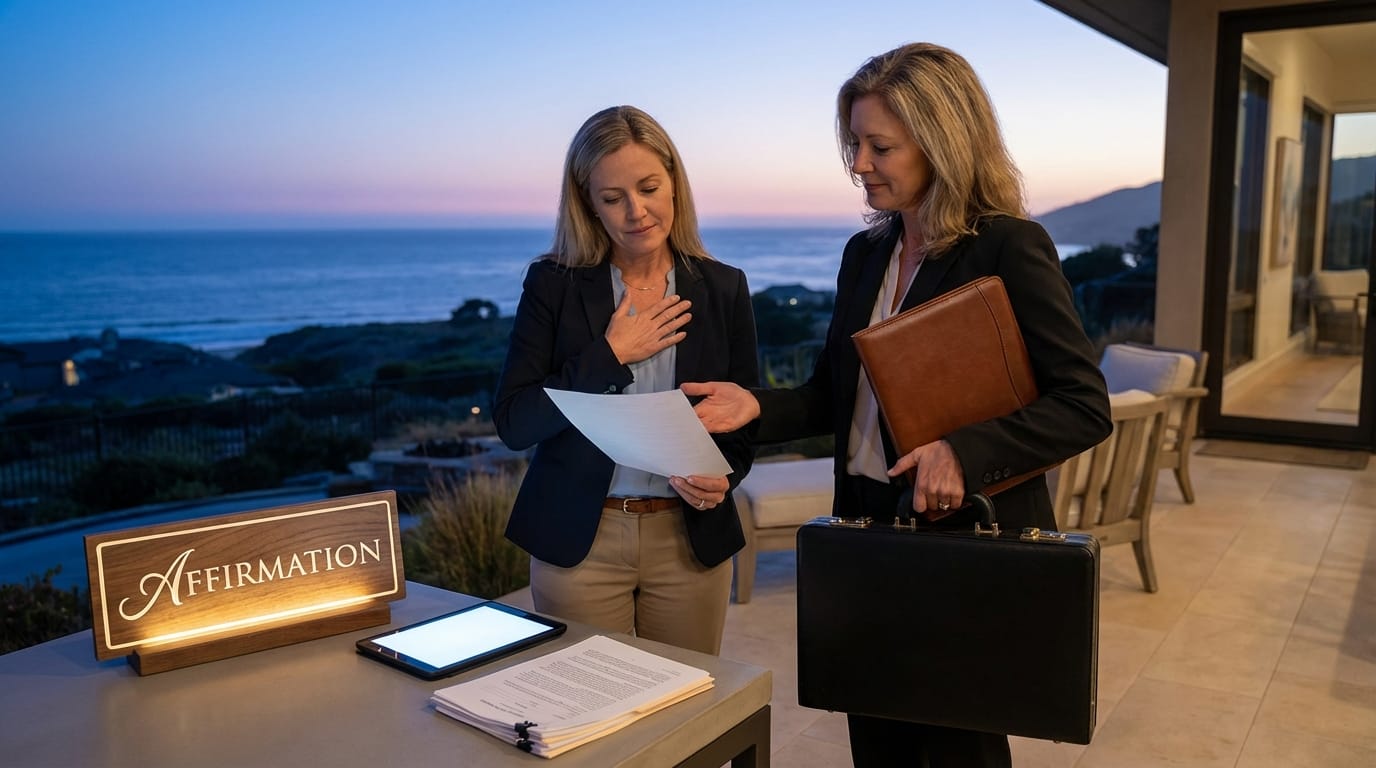
Administering a proper Affirmation is a critical step in ensuring the legal validity of your documents during a mobile notary appointment. We take this process seriously at SLO Notary because a skipped or botched verbal ceremony can jeopardize everything from a home loan to a power of attorney.
Key Takeaways
-
An affirmation is a secular alternative to an oath, carrying the same legal weight without religious references.
-
The signer must be physically present before the notary to perform the verbal ceremony.
-
The choice between an oath or affirmation always belongs to the signer, not the notary public.
-
Proper ID verification is a mandatory prerequisite before any verbal pledge is administered.
-
Failure to perform the verbal ceremony can lead to the document being rejected by courts or recorders.
Why the Verbal Ceremony is Non-Negotiable
Many people think a notary’s job is just about checking an ID and pressing a stamp onto paper, but that’s only half the story. The verbal ceremony—where the signer pledges the truthfulness of the document—is where the legal “teeth” of the act actually come from. If we don’t ask you to swear or affirm, the document might not hold up in court if it’s ever challenged. Honestly, it’s one of the most skipped steps by lazy notaries, and it drives us crazy because it puts the client at risk.
We see this quite often with DIY notaries or inexperienced agents who skip the ceremony to save a few minutes. You can read about 10 common mistakes to avoid when hiring a notary public to see why cutting corners is a bad idea. According to the County of San Luis Obispo, a notary acts as an impartial witness to official acts, and that includes ensuring the signer understands the gravity of their statement. It’s not just a formality; it’s a legal requirement that protects everyone involved in the transaction.
Oath vs. Affirmation: Choosing the Right Path
It basically comes down to personal belief and what makes the signer feel most comfortable. An oath is a pledge to a higher power, usually involving a Bible or the phrase “So help me God,” which has been the traditional standard for centuries. An Affirmation, on the other hand, is a pledge based on your own personal honor and conscience without any religious overtones. Both carry the exact same legal weight and the same penalties for perjury if you’re caught lying on the document.
As noted by the National Notary Association, the choice between an oath and an affirmation is entirely up to the signer, not the notary public. We never assume which one you want; we just ask what you prefer. Here is a quick breakdown of how they compare in a professional setting:
|
Feature |
Notary Oath |
Notary Affirmation |
|---|---|---|
|
Basis of Pledge |
Religious / Supreme Being |
Secular / Personal Honor |
|
Standard Language |
“Do you solemnly swear…” |
“Do you solemnly affirm…” |
|
Legal Validity |
Fully Binding |
Fully Binding |
|
Signer Choice |
Yes |
Yes |
How to Correctly Administer the Affirmation
When we arrive at your home or office in San Luis Obispo, the process follows a specific rhythm to ensure everything is compliant with California law. First, we have to verify your identity using a valid government photo ID, like a driver’s license or passport. Once we’ve established who you are and that you’re signing of your own free will, we move to the verbal part. We’ll ask you to either raise your right hand or simply look us in the eye while we speak the required words.
The phrasing needs to be clear so there’s no confusion about what you’re agreeing to. According to Notary.net, the notary should use clear and authoritative language, such as: “Do you solemnly affirm, under penalty of perjury, that the statements in this document are true?” You must give an affirmative verbal response—a nod of the head isn’t enough. We need to hear you say “I do” or “Yes” to make it official in our notary journal.
“The verbal affirmation is the moment a signature transforms from a mere scribble into a legally binding testimony that can stand up in a court of law.”
-
Confirm the signer is physically present and appears to be of sound mind.
-
Verify the signer’s identity using approved identification methods.
-
Ask the signer if they prefer to take a religious oath or a secular affirmation.
-
Administer the verbal pledge using the specific language required for a jurat or verification.
-
Wait for the signer’s clear, audible verbal agreement before proceeding to sign.
Managing Affirmations in Sensitive Situations
Estate Planning and Wills
In our work as an estate planning notary public, we often handle affirmations for trusts and healthcare directives. These are high-stakes documents where the signer might be under a lot of emotional stress or dealing with health issues. We take extra care to ensure they fully understand that by affirming, they are legally bound to the contents of those papers. It’s about more than just the law; it’s about making sure a family’s legacy is protected through proper procedure.
Hospital and Bedside Signings
Hospital signings are a huge part of what we do across San Luis Obispo County, and they require a delicate touch. When someone is in a hospital bed, they might not be able to raise their right hand, and that’s perfectly fine. The law allows for flexibility in the physical gesture as long as the verbal intent is clear and the signer is conscious. We focus on clear communication and making sure the patient isn’t being pressured into the affirmation by anyone else in the room.
Technical Requirements and Documentation
Once the verbal Affirmation is complete, the paperwork has to reflect exactly what happened. This usually involves a Jurat certificate, which specifically states that the document was “subscribed and sworn to (or affirmed)” before the notary. If the document doesn’t have the right wording already printed on it, we have to attach a separate piece of paper. You can learn about loose notary certificates to understand why this extra step is sometimes necessary for a clean filing.
Look, the bottom line is that the affirmation is your shield. It proves that you weren’t just signing a random piece of paper, but that you were making a formal statement. If a notary just hands you a pen and points to a line without saying a word, they aren’t doing their job correctly. We take pride in doing it right every single time because we know how much these documents matter to your life and business. It might seem like a small detail, but in the legal world, small details are everything.
Frequently Asked Questions
Do I have to raise my right hand for an affirmation?
While raising the right hand is a traditional custom that adds solemnity to the act, it is not strictly required by California law. As long as the verbal pledge is made clearly and the notary can confirm your intent, the affirmation is legally valid. We often skip the hand-raising for clients in hospitals or those with mobility issues to keep things comfortable.
Can I perform a notary affirmation over a video call?
No, California law currently requires that the signer be in the physical presence of the notary public at the time of the act. Even if you can see and hear us on a screen, we cannot legally administer an affirmation or oath remotely. This is why our mobile service is so popular, as we bring the “physical presence” requirement directly to your front door.
What happens if I lie during an affirmation?
Lying during a notary affirmation is considered perjury, which is a serious criminal offense that can lead to fines or even jail time. Since the affirmation is a legal pledge, any false statements made within the document are treated the same as if you lied while testifying in a courtroom. We always remind our clients that they are signing under penalty of perjury to ensure they understand the risks.
Is an affirmation less “official” than a religious oath?
Absolutely not, as both acts carry the exact same legal weight in every court in the United States. The affirmation was specifically created to ensure that people who do not wish to use religious language can still provide legally binding testimony. Whether you swear to God or affirm on your personal honor, the result is the same: a validly notarized document.
Does SLO Notary charge extra for the verbal affirmation?
No, the verbal ceremony is a standard part of the notarization process and is included in the base fee for a Jurat or verification act. We believe in transparent pricing and don’t add “hidden” fees for performing the legally required steps of our job. Our mobile travel fee covers the convenience of us coming to you, while the act fee covers the actual ceremony and signing.
What if the signer is unable to speak the affirmation?
If a signer is non-verbal due to a medical condition but is still alert and competent, we can use alternative methods of communication. This might involve the signer writing their agreement, using a communication board, or using clear signals that have been established beforehand. We handle these situations with extreme care to ensure the signer’s intent is undeniable while maintaining legal compliance.
Conclusion
Correctly administering an Affirmation is about more than just following a script; it is about upholding the integrity of the legal system in San Luis Obispo County. Whether you are finalizing a home loan or setting up a living trust, our team is here to ensure every verbal ceremony and signature is handled with total precision. To schedule your mobile appointment today, reach out to us at SLO Notary Contact or call us at 805-500-2475.